A History on Fall Prevention
Why technology has enabled fall detection, but failed at prevention.
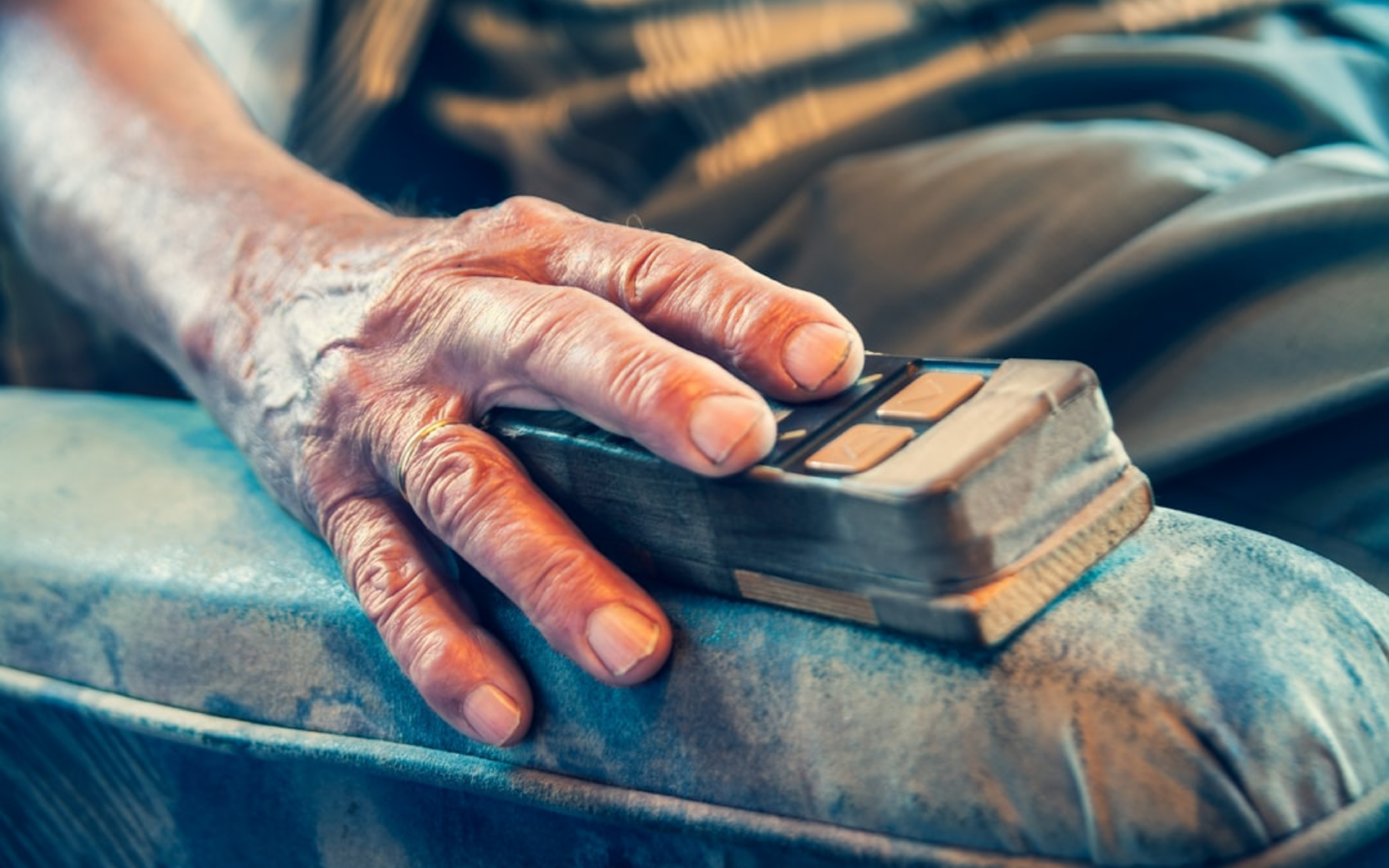
First there were call buttons (1960s)
“I need help!”
Simple, effective, and timeless. The backbone of in-room safety has always been call buttons, and it always will be.
But operators and engineers eventually ran into a hard truth: call buttons don’t prevent falls — they document them after the fact. A resident has to be aware, able, and fast enough to press the button. And the most dangerous moments (getting up in the dark, rushing to the bathroom, dizziness, weakness) often happen before someone can ask for help.
So they came together to determine the cause of the call:
Why are residents pressing the button so often?
Why do calls spike at night?
Why do falls cluster around toileting?
Why do we only learn about risk after an incident?
Call buttons solved notification. What the industry needed next was early warning.
Then there were sensors (1970s)
So they came together to build sensors that could detect motion and risky events automatically — without relying on the resident.
Pressure mats. Bed alarms. Chair alarms. Door sensors. Wearables. Pendants.
The promise was straightforward: If we can detect a risky moment instantly, we can prevent the fall.
But prevention failed, over and over, for the same reasons:
1) Sensors detect events, not context
A bed alarm can tell you that weight shifted. It can’t answer:
Is the resident stable or dizzy?
Are they using a walker?
Are they getting up because they’re in pain?
Is the room dark?
Have they been going to the bathroom more often lately?
Without context, the system either:
alerts too often (fatigue), or
misses the moments that matter (false negatives).
2) They created constant noise → staff learned to ignore them
When alerts come too frequently, human behavior adapts. Teams get desensitized, alerts become background, response slows, and the system becomes another thing staff must manage.
This is why so many facilities quietly stop using alarms as designed. Not because they don’t care — because the workflow breaks under real-world staffing constraints.
3) They still trigger too late
Most sensor alarms fire at the moment of transition — when the resident is already standing, already rushing, already unstable. That’s not prevention. That’s a race.
In other words: sensors made “reaction” faster, but they didn’t make care proactive.
“Sometimes you need to step back to move forward with purpose.”
The industry tried to solve prevention by adding more devices — and ended up adding more burden. The lesson was uncomfortable but important:
If the solution increases exhaustion, it can’t scale.
The challenge is that our culture often labels rest as weakness. We are conditioned to equate “doing more” with “being more,” which can lead to a constant undercurrent of guilt when we choose to slow down. But rest isn’t the opposite of progress — it’s an essential part of it. Without it, our work loses depth, our creativity dries up, and our resilience wears thin.
In senior care, staff are the system. Any “safety improvement” that floods them with alarms eventually collapses under fatigue.
Then there was radar (1990s).
Radar-based fall detection promised something new: detect motion without cameras, preserve privacy, and reduce false alarms.
It was a step forward — but it still struggled with the same core issue: radar sees movement patterns, not daily living reality.
Radar often can’t reliably interpret:
assistive devices (walker use),
hazardous objects (trip/slip risks),
the why behind the movement,
subtle decline over days/weeks that signals rising fall risk.
And when radar did alert, it still often surfaced risk at the “last moment” — during the attempt, not before the pattern formed.
Then there was computer vision (2000s).
Computer vision changed the category because it finally made context possible.
Instead of asking “did motion happen?”, vision can understand:
what is happening (attempting to stand, stumbling, reaching, distress),
how it’s happening (steady vs unsteady gait, speed changes, abnormal behavior),
when it happens (night vs day, after meds, around toileting),
and how patterns change over time.
But early vision systems still failed at prevention for two reasons:
They were built for detection (falls), not for proactive risk (the lead-up).
They often introduced privacy concerns, which limited deployment or forced compromises that reduced usefulness.
So the industry had the right sensing modality — but still lacked:
privacy-first deployment,
workflow integration,
and a prevention-first product philosophy.
And now there’s Jasemin (present).
Jasemin is built around a simple idea: prevention requires context, trends, and timing — delivered in a way staff can actually act on.
We improve by letting operators know anything they need to know:
Risks, emergencies, and urgency in rooms
from “trying to get up in the dark” to “distress” to “trip/slip hazards”
Trends in mobility, sleep, hydration, and urination
the subtle shifts that signal decline before a crisis
Root causes for falls and other incidents
what happened, contributing factors, and what to change
Staff time distribution by room and care item
where workload is going, what’s driving calls, and where care plans should adjust
We relay the info to you via plug-and-play hardware and an intuitive mobile app, and we have a natural language interface so you can ask things like:
When did the resident start drinking less water?
When does the resident usually have to go to the bathroom?
Who goes the most at night?
How has the resident’s sleep been since the medication switch on Wed?
Which rooms are showing signs of cognitive/physical decline?
Why did the resident fall, and how can we prevent them from falling in the future?
Why earlier systems failed at prevention — and why Jasemin doesn’t
Because prevention isn’t just faster alerts. Prevention is:
catching early trend changes (before the risky moment),
catching late-stage hazards (during the risky moment),
and making sure staff get the message in a way that reduces burden, not adds to it.
We flag risks as early as identifying abnormal behavioral shifts (like changes in sleep or hydration after a medication switch), and as late as detecting a resident attempting to get up from bed at night.
And we optimize calls and support staff with real-time room logs — helping leadership see where changes in staffing or care plans make sense through staff time distribution by room and care type.
Because the future of fall prevention isn’t one device.
It’s a system that understands the room, respects privacy, and gives your team the right information before the fall happens.